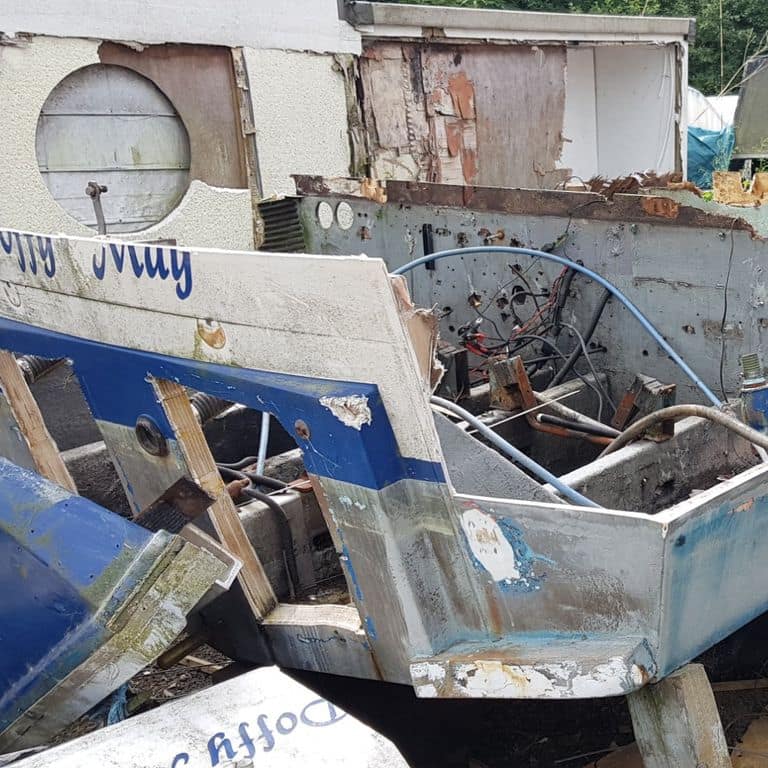
The best way to avoid a fuel or oil spill is to have the boat professionally dismantled. This way, all of the fluids can be properly drained and disposed of, and the hull can be safely removed from the water. Otherwise, even a small spill can cause significant environmental damage, contaminate water supplies, and harm wildlife.
To avoid these risks, it is important to remove all fuel and oil from the boat at the first steps of dismantling. All fuel tanks, oil filters, and other sources of oil and fuel must be emptied and cleaned before disposal.
Once this stage is complete, the hull can be disposed, by landfilling or incineration. The former is acceptable for wooden hulls, but fibreglass requires a different approach. The Waste-To-Energy Incineration is the preferred method of disposal of the GRP hulls, as it generates energy that can be used to power homes and businesses. Landfilling such hulls is not recommended, as they will not decomposed for centuries and can release harmful chemicals into the ground.
Responsible disposal of motor boats is essential to protecting the environment. Fuel and oil spills can cause serious damage, and hull materials should be recycled or incinerated to prevent environmental pollution.